Loading Table of Contents...
Professional SEO-Optimized E-commerce Website Design
Professional SEO-optimized e-commerce website design with an optimized user experience, payment, order management, and operations. Full-service e-commerce website design tailored to your needs.
Professional SEO-Optimized E-commerce Website Design
Professional e-commerce website design should help businesses reach customers, create a seamless shopping experience, process orders, and build a foundation for long-term marketing, SEO, and business growth. Connect Tech develops e-commerce websites tailored to each business model, from online stores and retail brands to e-commerce systems requiring integration with multiple platforms.
Explore the essential features, criteria, and SEO-optimized e-commerce website solutions from Connect Tech to build a platform that fits your business and is ready for long-term operations and growth.
What should a professional e-commerce website achieve?
An effective e-commerce website should be viewed from the perspective of the entire business journey rather than focusing solely on the interface. From the moment customers discover a brand to the point when they complete an order, every touchpoint should be intentionally designed.
Attract customers
A website is an official touchpoint that helps businesses bring their products closer to customers.
A well-built platform can serve as a central hub connecting multiple traffic sources, including:
- Google and organic search.
- Google Ads.
- Facebook, TikTok, and other Social Media channels.
- Email Marketing.
- Remarketing.
- E-commerce marketplaces and other sales channels.
Unlike a marketplace store, an independent website gives businesses greater control over their brand, content, customer data, and shopping experience.
In particular, when a website is built with an SEO-friendly structure from the beginning, businesses can continue developing content and expanding their search touchpoints throughout the website's operation.

E-commerce website designed to attract customers
Create a seamless shopping experience
Customers do not simply need to see a product. They need to find the right product, understand it, trust the brand, and complete their purchase conveniently.
Therefore, the website experience should be designed around factors such as:
- Clear navigation.
- Fast search.
- Relevant filters.
- Visual product images.
- Complete product information.
- Clearly visible CTAs.
- A simple ordering process.
- Mobile-friendly design.
- Convenient payment options.
A visually appealing e-commerce website can create a strong first impression, but its real value lies in helping customers find products, make decisions, and complete orders conveniently. For businesses with relatively simple product catalogs, a simple e-commerce website can still effectively meet business needs if the product structure, navigation, shopping cart, and payment process are organized properly.
Support business operations
The website should also support the team behind the sales operation.
The management system can help businesses:
- Manage products.
- Manage SKUs and product variants.
- Track inventory.
- Manage orders.
- Manage customers.
- Update promotional campaigns.
- Monitor payment status.
- Track deliveries.
As the business grows, the website can also connect with CRM, ERP, POS, inventory systems, shipping providers, or third-party platforms through APIs.

Operational support for an e-commerce website
Build a foundation for growth
A website should not stop serving its purpose once it goes live.
The platform can continue to support:
- SEO.
- Content Marketing.
- Online Marketing.
- Google Ads.
- Social Media.
- Remarketing.
- Customer behavior analysis.
- Conversion rate optimization.
- New feature development.
9 essential e-commerce website features that support the buying process
Not every website needs exactly the same features. The system should be selected based on the number of products, sales model, operational processes, and growth requirements of each business.
So, what does an e-commerce website need to serve customers while also helping businesses operate efficiently? The following feature groups are commonly considered when building an e-commerce system.
1. Product, SKU, and variant management
The management system should allow businesses to easily update:
- Product names and descriptions.
- Images and videos.
- Selling prices.
- SKUs.
- Product codes.
- Colors.
- Sizes.
- Materials.
- Volumes.
- Inventory for each variant.
For fashion, cosmetics, and retail businesses, effective product variant management is particularly important because each color, size, or version may have its own inventory.
Behind this is a suitable e-commerce website database design that allows the system to manage data accurately and continue scaling as the number of products increases.
2. Shopping Cart and Checkout
The shopping cart is the transition point between browsing a product and showing purchase intent.
A good system should allow customers to:
- Add products.
- Change quantities.
- Remove products.
- Select product variants.
- Check prices.
- Enter discount codes.
- Confirm shipping fees.
- Enter delivery information.
The checkout process should be optimized to eliminate unnecessary steps. The more unnecessary actions or required information customers have to provide, the higher the risk of them leaving the website before completing their orders.

Shopping cart and checkout process on an e-commerce website
3. Online Payment and COD
The website can support multiple payment methods depending on the business model:
- Cash on delivery.
- Bank transfer.
- Online payment gateways.
- Other electronic payment methods.
The integration should ensure that order and payment statuses are updated accurately, reducing manual work for employees.
4. Discount codes, bundles, and promotions
Promotion features allow businesses to proactively create various sales campaigns:
- Discount codes.
- Percentage discounts.
- Fixed-amount discounts.
- Buy-more-save-more offers.
- Product bundles.
- Gifts.
- Order-value-based promotions.
- Promotions for existing customers.
The system should be designed flexibly so businesses can change promotional campaigns without directly modifying the source code.
5. Product reviews and ratings
Reviews and ratings can help reduce customer hesitation before making a purchase.
Depending on the industry, the website can allow customers to:
- Rate products.
- Write reviews.
- Upload images.
- Share their product experience.
- Ask questions about products.
Authentic customer-generated content can also become a valuable source of UGC to support marketing activities and build brand trust.

Product reviews on an e-commerce website
6. Wishlist and product saving
Not every customer who visits a website will make a purchase on their first visit.
A wishlist allows users to save products they are interested in so they can:
- Return and purchase later.
- Compare products.
- Track products.
- Receive notifications when promotions are available.
This also provides useful data for customer engagement and Remarketing activities.

Product saving feature on an e-commerce website
7. Order management
The management system should help businesses track the entire order lifecycle:
Order placement → confirmation → processing → shipping → completion.
Businesses may also need additional statuses such as:
- Awaiting payment.
- Paid.
- Processing.
- Out for delivery.
- Successfully delivered.
- Canceled.
- Returned.
A clear order management system helps reduce errors and enables employees to process orders more efficiently.

Order management interface for an e-commerce website
8. Inventory management
For businesses with a large number of products, inventory management directly affects operational efficiency.
The website can support:
- Inventory tracking.
- Inventory management by SKU.
- Quantity updates after an order is placed.
- Low-stock alerts.
- Out-of-stock product management.
If the business is already using inventory management software or an ERP system, the website can be integrated to synchronize data rather than managing inventory separately.
10. Customer accounts and purchase history
Customer accounts allow users to manage their personal information and track previous transactions.
Common functions include:
- Personal information.
- Delivery addresses.
- Purchase history.
- Order status.
- Favorite products.
- Previous orders.
- Product repurchase support.
This data also provides a foundation for future customer retention and marketing programs.
5 reasons to choose Connect Tech's e-commerce website design services
Instead of applying a fixed website template, Connect Tech focuses on building solutions based on each business's model, target customers, and growth direction.
Business-driven website design
A fashion store needs to manage sizes and colors. A cosmetics brand needs to categorize products based on skincare needs. A gift business may need ordering based on specific occasions and delivery times. Therefore, professional online e-commerce website design should not start with a ready-made template but with the business model and how the business actually operates.
Before building a website, Connect Tech focuses on identifying:
- What does the business sell?
- Who are its customers?
- What does the current purchasing process look like?
- Which departments should the website support?
- Is the primary goal to generate sales, build the brand, or develop an SEO channel?
- Does the website need to connect with existing systems?
Based on these factors, the website structure and features are selected accordingly rather than simply maximizing the number of features.

E-commerce website design based on a business model
Combining Website, SEO, and Digital Marketing
Website development and marketing should not be built as two separate systems.
Connect Tech can simultaneously implement:
- Website development.
- SEO.
- SEO Content.
- Digital Marketing.
- Tracking and measurement.
From the website development stage, factors related to structure, speed, content, tracking, and SEO scalability can be taken into consideration. This gives the website a stronger foundation when the business begins implementing online marketing after launch.
Optimizing UX/UI around the customer journey
A visually appealing e-commerce website can make a strong impression on customers, but the interface is only one part of the overall experience. Connect Tech focuses on designing touchpoints around the journey:
Search → Discover → View Product → Review → Add to Cart → Checkout → Track Order.
Each step should minimize distractions and help customers quickly move toward the next action. The interface is also built responsively to ensure a consistent experience across desktop, tablet, and mobile devices.

UX/UI optimization for an e-commerce website
Integration and scalable development
An e-commerce website may start with basic functions, but business needs often change over time.
Connect Tech can implement integrations with:
- Payment gateways.
- Shipping providers.
- CRM.
- ERP.
- POS.
- Inventory management systems.
- Analytics tools.
- Marketplaces.
- APIs and internal systems.
The goal is to ensure that the website does not become an isolated system but can connect with the digital ecosystem already in operation.
Ongoing support after launch
A website needs ongoing maintenance after launch. Connect Tech can support activities such as:
- Data backup.
- Security.
- Bug fixes.
- System updates.
- Speed optimization.
- Technical support.
- Additional feature development.
- SEO and Content.
- Conversion optimization.
This allows businesses to continue developing their websites rather than having to rebuild the entire system as their operations grow.
E-commerce website design pricing at Connect Tech
E-commerce website design at Connect Tech starts from VND 10,000,000, depending on the level of interface customization, e-commerce features, and integration requirements of each business. Connect Tech currently offers packages ranging from basic to professional:
|
|
|
|
|
|
|
|
|
|
|
|
|
|
|
|
|
|
|
|
|
|
|
|
|
|
|
|
|
|
|
|
|
|
|
|
|
|
|
|
The e-commerce package from VND 10 million is suitable for stores, brands, or businesses that need a website with essential e-commerce functions, focusing on product presentation and order collection. For businesses looking for affordable online e-commerce website design, it is important to consider not only the initial cost but also future scalability, maintenance, and integration requirements.
The professional e-commerce package from VND 15 million is suitable for businesses that need an enhanced shopping experience, online payment, and the ability to expand with additional features supporting business operations.
E-commerce website design projects by Connect Tech
From fashion and cosmetics to food and gifts, Connect Tech has developed various e-commerce websites tailored to the specific requirements of each industry. Below are several representative projects demonstrating the interfaces, features, and operational solutions implemented by Connect Tech.
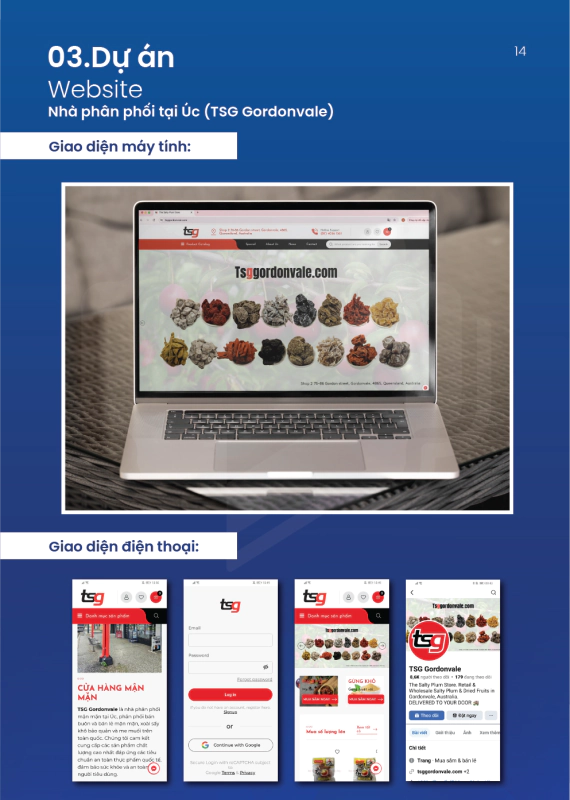
The Salty Plum Store – E-commerce in Australia
Industry: Food – E-commerce
Market: Queensland, Australia
Connect Tech built an E-commerce system using PHP Laravel, integrating PayPal, Stripe, and a shipping API to automatically calculate real-time delivery fees. The website was combined with Technical SEO, eBay Australia, and multi-channel Marketing activities. Revenue increased 5x, while the Fanpage achieved more than 5 million views.

The Salty Plum Store e-commerce website interface
HERBKC – Fashion E-commerce Website
Industry: Women's handbags – Fashion accessories
Connect Tech developed an E-commerce system using PHP Laravel to meet the e-commerce website design requirements of a fashion brand, focusing on product and variant management, fashion-focused visual presentation, and an optimized checkout process.
The interface was designed with a minimalist approach so that products remained the main focus, while the platform was prepared for SEO and multi-channel Marketing activities.

HERBKC e-commerce website interface across multiple devices
Makyn – Herbal Garden
Industry: Natural cosmetics – Beauty care
Connect Tech built an E-commerce website using PHP Laravel with a nature-inspired interface, a product management system, and a structure suitable for SEO activities. The website was designed to present product imagery, ingredients, and product experiences in a clear and engaging way.

Makyn e-commerce website interface across multiple devices
Nicefruits – Gift E-commerce Website
Industry: Imported fruit – Fresh flowers – Gifts
Nicefruits needed a system capable of processing occasion-based orders, allowing customers to select delivery times, and supporting same-day delivery requirements. Connect Tech implemented an E-commerce solution using PHP Laravel, combined with gift-industry UI/UX and features designed for event-based ordering.

Nicefruits e-commerce website interface across multiple devices
Frequently asked questions about e-commerce website design
What are the steps involved in e-commerce website design?
A typical e-commerce website design process includes:
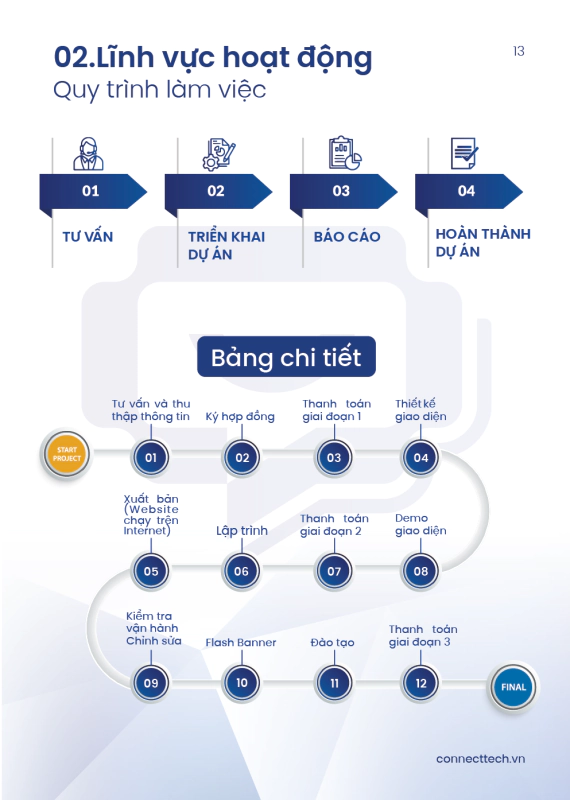
Needs analysis → structure planning → UX/UI → development → integration → data entry → SEO optimization → testing → website launch → warranty and support.
Depending on the project size, some steps may be carried out in parallel.
What pages should an e-commerce website include?
A basic website typically includes:
- Homepage.
- Category pages.
- Product pages.
- Search page.
- Shopping cart.
- Checkout.
- Customer account.
- Blog.
- Contact page.
- Landing pages (product campaigns, promotions, or advertising campaigns).
- Purchase policy.
- Shipping policy.
- Return policy.
For larger websites, the structure can be expanded based on product categories, brands, collections, or customer search needs.
Does an e-commerce website need SEO from the beginning?
Yes. SEO should be considered during the website development stage rather than after the website has been completed. Factors such as category structure, URLs, internal links, page speed, responsive design, sitemap, metadata, and product data can affect the website's future SEO growth.
Therefore, SEO-optimized e-commerce website design should be viewed as a combination of design, technology, and content architecture from the beginning.
Does a website need maintenance after handover?
Yes. E-commerce websites regularly process customer data, orders, and transactions, so they require ongoing monitoring and maintenance.
Common tasks include:
- Backup.
- System updates.
- Security.
- Error checking.
- Speed monitoring.
- Troubleshooting.
- Feature upgrades.
- Third-party integration checks.
Can features be expanded after the website goes live?
Yes. A website built with an appropriate architecture can continue to support additional functions such as membership programs, Loyalty, Recommendation, Mobile Apps, CRM, ERP, Automation, or custom management systems.
This is also why businesses should define their development direction from the early stages rather than focusing only on current requirements.
Professional e-commerce website design is not only about visual appearance. It should provide a convenient shopping experience, support business management, and create a foundation for SEO, Marketing, and long-term business operations.
Connect Tech provides customized website design solutions that combine technology, SEO, and Digital Marketing, allowing websites to grow alongside businesses. Contact Connect Tech for a solution tailored to your business model and growth objectives.
Table of Contents
Related news

Professional SEO-Optimized E-commerce Website Design
Professional SEO-optimized e-commerce website design with an optimized user experience, payment, order management, and operations. Full-service e-commerce website design tailored to your needs.

Custom SEO-Optimized WordPress Website Design Solutions
WordPress website design guide. Providing professional web design services to help businesses optimize UX and boost conversion rates. Get a quote now!

Complete SEO-Friendly Custom Corporate Website Design
Complete corporate website design with professional UX/UI, SEO optimization, and conversion-focused solutions. Explore Connect Tech’s pricing and services.

Professional & Affordable Real Estate Website Design to Increase Closing Rates
Professional, affordable real estate website design optimized for UX/UI, SEO, speed, and functionality — helping businesses build credibility, generate leads, and increase conversion rates.

Why Does a Website Have No Traffic? Causes & Effective Solutions
Why does your website have no traffic? Connect Tech analyzes the five most common causes and provides practical solutions to help your website generate sustainable organic traffic. Contact us for expert consultation today!

Website Lead Generation: How Many Leads Per Month? Calculation Formula
How many leads should your website generate each month? Connect Tech explains the lead calculation formula, industry benchmarks, and proven strategies to optimize your website for sustainable lead generation and higher conversions.